Publication of ROADS Phase 3 Clinical Trial Data in Journal of Clinical Oncology Recommends GammaTile® as a New Standard-of-Care Option for Newly Diagnosed Operable Brain Metastases1
TEMPE, Ariz., Sept. 29, 2026
Press Release Disclaimer: This is a press release distributed through the XPR Media network. It has not been independently verified by our newsroom.

Publication of ROADS Phase 3 Clinical Trial Data in Journal of Clinical Oncology Recommends GammaTile® as a New Standard-of-Care Option for Newly Diagnosed Operable Brain Metastases1
PR Newswire
TEMPE, Ariz., Sept. 29, 2026
- Phase 3 trial results earn Rapid Communication status, underscoring the importance of the ROADS findings in clinical practice, with the trial authors endorsing GammaTile as a new standard-of-care option for newly diagnosed operable brain metastases1
- GammaTile demonstrated 98.7% local tumor control by 12 months, compared to 84.6% for standard-of-care, reducing the risk of surgical bed recurrence at 12 months by more than 90% (HR: 0.07, 95% CI: 0.01–0.56; p=0.012)1*
- GammaTile is estimated to reduce the combined risk of tumor recurrence or death by more than 50% compared to standard-of-care (HR: 0.48, 95% CI: 0.30-0.76, p=0.002)1
- The median overall survival for patients who received GammaTile was longer than that of patients who received standard-of-care: median overall survival was 42.5 months compared to 17.6 months with standard-of-care (HR: 0.59, 95% CI: 0.37-0.96, p=0.032)1
- Treatment with GammaTile did not increase the risk of side effects compared to standard-of-care.1
TEMPE, Ariz., Sept. 29, 2026 /PRNewswire/ — GT Medical Technologies, a company focused on improving the lives of patients with brain tumors, today announced the publication of the results of the randomized, multicenter ROADS trial (NCT04365374) as a Rapid Communication in the Journal of Clinical Oncology (JCO), the official journal of the American Society of Clinical Oncology (ASCO). Rapid Communication is a discretionary designation JCO’s editors may grant to manuscripts accepted, reserved for findings of exceptional significance.2 Recommended manuscripts post online within days of acceptance and are openly accessible upon publication, well ahead of standard timelines, so that practice-changing data reaches oncologists faster than standard publication timelines allow.2 The data demonstrate that patients with newly diagnosed operable brain metastases treated with tumor removal surgery and GammaTile® cesium-131 collagen tile-based radiation therapy (TBRT) experienced lower local tumor recurrence and lived significantly longer compared to the standard-of-care approach of surgery followed by post-operative stereotactic radiation therapy (SRT).1
Study authors conclude GammaTile should be considered a standard-of-care option
In the manuscript’s conclusion, the study authors state that GammaTile should be considered a standard-of-care option for patients with newly diagnosed brain metastases. This conclusion is based on several compelling pieces of evidence, including:1
- ROADS is a multicenter randomized phase 3 trial with longer median follow-up than the studies that established post-operative SRT as standard-of-care
- GammaTile was superior on both co-primary endpoints
- The reduction in surgical bed recurrence was substantial
- The efficacy gain came without an increase in radiation necrosis, neurocognitive decline, or quality-of-life deterioration
“The Rapid Communication publication in the Journal of Clinical Oncology reflects how significant these findings are for patients with newly diagnosed brain metastases,” said Jeffrey Weinberg, MD, professor of Neurosurgery at The University of Texas MD Anderson Cancer Center, co-lead investigator of the ROADS trial, and first author on the publication. “Standard-of-care treatment for this disease has always focused on controlling the tumor in the brain so patients can get back to fighting their primary cancer, and TBRT (GammaTile) does that more effectively than existing treatment options. By initiating radiation at the moment of surgery, TBRT closes the gap between resection and radiation treatment for the operable tumor entirely, and this randomized evidence supports it as a new standard-of-care option that gives patients that certainty from day one.”
How does GammaTile address limitations of the post-operative SRT pathway?
GammaTile, an FDA-cleared, bioabsorbable collagen implant embedded with 4 cesium-131 radiation sources, is placed directly in the surgical cavity at the time of tumor removal. Radiation begins immediately when surgery ends. The current standard-of-care approach for operable brain metastases is surgery to remove the tumor, followed by post-operative SRT multiple weeks later, once the patient has recovered from surgery. That time gap is not only a source of anxiety for patients and families waiting to know if treatment for the operable brain tumor is complete; it also creates a window in which any tumor cells left behind after surgery may regrow before radiation begins.
In the ROADS trial, 17.8% of patients randomized to standard-of-care did not receive their prescribed post-operative SRT,1 consistent with published data showing that 20-27% of patients do not complete their full prescribed course of post-operative SRT,3,4 a limitation of the post-operative SRT strategy itself. Because GammaTile is placed at the time of surgery, radiation begins immediately, eliminating the risk of prescribed radiation going undelivered.1 Measured against standard-of-care, GammaTile demonstrated superior efficacy on both co-primary endpoints and significantly longer overall survival.1
While delays in or failure to receive post-operative SRT are a reality of current standard-of-care, the study authors also examined how GammaTile compared when the analysis was limited to only those patients in each arm who received their prescribed radiation. Even in this comparison, GammaTile’s superiority in local tumor control and surgical bed recurrence-free survival persisted.
“That many patients do not receive post operative SRT appears to be an underappreciated issue amongst physicians caring for these patients, but the benefit of TBRT (GammaTile) is not solely increased treatment completion,” said Thomas H. Beckham, MD, PhD, Associate Professor of CNS Radiation Oncology at The University of Texas MD Anderson Cancer Center and corresponding author on the publication. “The trial was designed to compare resection and TBRT versus resection and post-operative SRT, a pathway in which some patients do not ultimately receive their planned radiation. But even when we analyzed only those patients in each arm who did receive their assigned radiation, TBRT remained superior on both co-primary endpoints. That tells us this advantage isn’t explained solely by guaranteed radiation delivery. TBRT immediately begins concentrating a higher therapeutic dose of radiation right at the resection cavity, providing a continuous dose over the next few weeks, while minimizing radiation to surrounding healthy brain tissue, a fundamentally different biological approach than a delayed course of radiation delivered from outside the body.”
How did patients benefit from GammaTile in the ROADS trial?
The phase 3 trial randomized 230 patients with operable brain metastases across 32 centers to treatment with resection plus GammaTile or the standard-of-care approach of resection followed by post-operative SRT.1
- GammaTile showed superior performance in the study’s co-primary endpoints1
- GammaTile demonstrated a lower 12-month cumulative incidence of surgical bed recurrence (SBR) compared with standard of care (1.3% vs. 15.4%, HR: 0.07, 95% CI: 0.01–0.56; p=0.012)
- This represents the lowest tumor recurrence rate reported in a published randomized controlled trial of newly diagnosed operable brain metastases
- GammaTile reduced the combined risk of tumor recurrence or death by more than 50% compared to standard-of-care (HR: 0.48, 95% CI: 0.30-0.76, p=0.002)1
- GammaTile demonstrated a lower 12-month cumulative incidence of surgical bed recurrence (SBR) compared with standard of care (1.3% vs. 15.4%, HR: 0.07, 95% CI: 0.01–0.56; p=0.012)
- GammaTile provided benefit in key secondary endpoints1
- The median overall survival for patients who received GammaTile was more than twice as long as that of patients who received standard-of-care: median OS was 42.5 months compared to 17.6 months with standard-of-care (HR: 0.59, 95% CI: 0.37-0.96, p=0.032)1
- GammaTile demonstrated significant gains in efficacy with no increase in safety or patient reported health status concerns1
- Rates of grade 3 or higher treatment-related side effects remained low and comparable between arms (20.0% GammaTile vs. 21.7% standard-of-care)1
- Functional status, quality of life, time to distant brain failure, adverse events, leptomeningeal disease, and radiation necrosis were similar in both arms1
- In an exploratory composite analysis, GammaTile reduced the combined risk of tumor recurrence or radiation necrosis by more than 70% compared to standard-of-care (HR: 0.28, 95% CI: 0.12-0.66, p=0.004)1
How will publication of the ROADS results change clinical practice?
“The data from this multi-institutional randomized trial provide a high level of evidence demonstrating the superiority of resection plus GammaTile over the current standard-of-care. We expect that this rigorous peer-reviewed publication will give physicians confidence in adopting GammaTile as a first-line treatment for patients with newly diagnosed surgical brain metastases,” explained Dr. Michael Garcia, MD, MS, Chief Medical Officer of GT Medical Technologies. “Broader adoption of GammaTile can enable more patients to live longer without recurrence, an important advance in this indication.”
“As a company founded by brain tumor specialists, GT Medical recognizes the importance of randomized, controlled studies in driving the evolution of clinical practice,” said Per Langoe, Chief Executive Officer of GT Medical Technologies. “The publication of the ROADS trial results is a key milestone for the company, the clinical community, and patients with newly diagnosed brain metastases. We are committed to generating robust evidence in additional brain tumor indications, such as through the ongoing BRIDGES Phase 3 trial for newly diagnosed glioblastoma and providing additional data to inform clinical decision-making.”
What is tile-based radiation therapy (TBRT) with GammaTile?
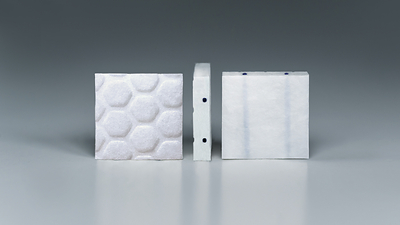
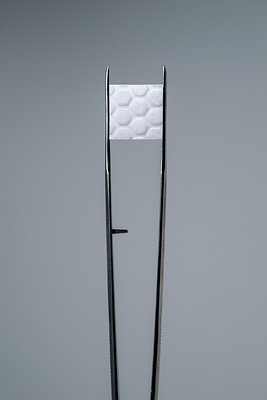
Each GammaTile is about the size of a postage stamp (2 cm x 2 cm) and contains purposefully spaced seeds containing cesium-131 that emit low-dose rate radiation over several weeks.5 GammaTile is used to line the cavity that remains after the tumor has been removed, ensuring even distribution of radiation across the surface of the cavity and precise targeting of remaining tumor cells. This highly localized approach targets remaining cancer cells when they are at their lowest levels to help prevent tumor regrowth.5 The emitted radiation only travels a short distance, which maximizes dosing to the tumor cavity while minimizing radiation dose to surrounding healthy brain tissue.6
Is GammaTile commercially available?
GammaTile is FDA-cleared for newly diagnosed malignant (cancerous) and recurrent brain tumors and has been adopted by more than 150 leading centers across the United States, underscoring its growing acceptance in both academic and community healthcare settings.7 For more information, visit gammatile.com and follow @GammaTile on Facebook, Instagram, LinkedIn and X.
About GT Medical Technologies, Inc.
GT Medical Technologies was founded by a dedicated team of brain tumor specialists to address unmet needs in brain tumor treatment. The company is committed to improving the lives of patients with brain tumors through innovative solutions that elevate the standard-of-care.
Media Contact
Alyssa Paldo
FINN Partners
alyssa.paldo@finnpartners.com
847-791-8085
*Local control calculated as 100% minus the cumulative incidence of surgical bed recurrence (SBR) expressed as a percentage.
References
- Weinberg JS, Imber BS, DiNapoli V, et al. Surgery and tile-based radiation therapy versus surgery and stereotactic radiation for newly diagnosed brain metastases (ROADS): a randomized, open-label, phase 3 trial. J Clin Oncol. 2026. DOI: 10.1200/JCO-26-01894
- American Society of Clinical Oncology. Submit a Manuscript. ASCO Publications. Accessed September 2026. https://ascopubs.org/authors/submit-manuscript
- Brennan C, Yang TJ, Hilden P, et al. A phase 2 trial of stereotactic radiosurgery boost after surgical resection for brain metastases. Int J Radiat Oncol Biol Phys. 2014;88:130-136.
- Yeboa DN, Li J, Lin R, et al. Therapy, safety, and logistics of preoperative vs postoperative stereotactic radiation therapy: a preliminary analysis of a randomized clinical trial (NCT03741673). JAMA Oncol. 2025;11(8):890-899.
- Garcia MA, Turner A, Brachman DG. The role of GammaTile in the treatment of brain tumors: a technical and clinical overview. J Neurooncol. 2024;166:203-212.
- Kutuk T, Kotecha R, Herrera R, et al. Surgically targeted radiation therapy versus stereotactic radiation therapy: a dosimetric comparison for brain metastasis resection cavities. Brachytherapy. 2024;23(6):751-760.
- Data on file. GT Medical Technologies, Inc.


 View original content to download multimedia:https://www.prnewswire.com/news-releases/publication-of-roads-phase-3-clinical-trial-data-in-journal-of-clinical-oncology-recommends-gammatile-as-a-new-standard-of-care-option-for-newly-diagnosed-operable-brain-metastases1-302892327.html
SOURCE GT Medical Technologies