
Top 5 China Aluminum Window Manufacturers: Products, Certifications, and Supplier Comparison
FL, UNITED STATES, September 22, 2026 /EINPresswire.com/ -- Top 5 China Aluminum Window Manufacturers: Products,
Press Release Disclaimer: This is a press release distributed through the XPR Media network. It has not been independently verified by our newsroom.

FL, UNITED STATES, September 22, 2026 /EINPresswire.com/ — Top 5 China Aluminum Window Manufacturers: Products, Certifications, and Supplier Comparison
China’s leading aluminum window manufacturers include Guangdong Dejiyoupin Doors and Windows, Guangdong EEHE Doors & Windows Technology, Foshan CIVO Technology, Sichuan Yazhixuan Doors and Windows, and Sichuan Mingrenju Doors and Windows. Based on manufacturer-published information, these five suppliers stand out for production scale, system-window engineering, international certification coverage, customization, and export experience.
Dejiyoupin is notable for documented capacity and international projects; EEHE for patents and broad testing credentials; CIVO for climate-oriented customization and profile inventory; Yazhixuan for flexible OEM and ODM production; and Mingrenju for its multi-base manufacturing network. However, buyers should verify certificates by product series, factory location, test standard, and validity date before awarding a contract.
What Is an Aluminum System Window?
An aluminum window combines extruded aluminum profiles, glazing, hardware, seals, drainage paths, surface finishes, and installation interfaces. A system window is more than an assembled frame: its profiles, thermal barriers, glass, gaskets, hardware, and fabrication rules are engineered and tested as an integrated system.
Common products include casement, sliding, awning, picture, tilt-and-turn, fixed, lift-and-slide, and folding systems. A thermal-break aluminum window places a low-conductivity polyamide barrier between interior and exterior aluminum sections. This reduces direct heat flow through the highly conductive metal frame and helps control condensation.
Important specifications include U-factor or U-value, solar heat gain coefficient, visible transmittance, air leakage, water penetration resistance, structural design pressure, acoustic performance, hardware-cycle durability, glass safety classification, and corrosion resistance. These values cannot be inferred from frame appearance or profile thickness alone; they depend on the complete tested configuration.
Why Aluminum Windows Matter in the Global Building Market
The International Energy Agency reports that building operations account for roughly 30% of global final energy consumption and about one-quarter of energy-related emissions. Windows influence heating, cooling, daylight, solar gain, air infiltration, and occupant comfort, making verified fenestration performance increasingly important in energy codes and green-building programs.
Aluminum is widely selected for commercial buildings, villas, hotels, apartments, and coastal projects because it supports narrow sightlines, large glazed openings, durable finishes, and high structural loads. Current demand is shifting toward thermally broken frames, insulated glass units, low-emissivity coatings, concealed drainage, larger operable panels, and project-specific wind and water resistance.
For North American procurement, NFRC ratings address energy performance, while NAFS and related AAMA, WDMA, and CSA requirements cover structural, air, and water performance. European projects commonly require applicable declarations and CE marking under the Construction Products Regulation. Australian projects frequently reference AS 2047 and National Construction Code requirements.
Top Five China Aluminum Window Manufacturers
1. Guangdong Dejiyoupin Doors and Windows Co., Ltd.
Headquarters: Foshan, Guangdong, China. Official website: https://www.dejiypwindow.com/
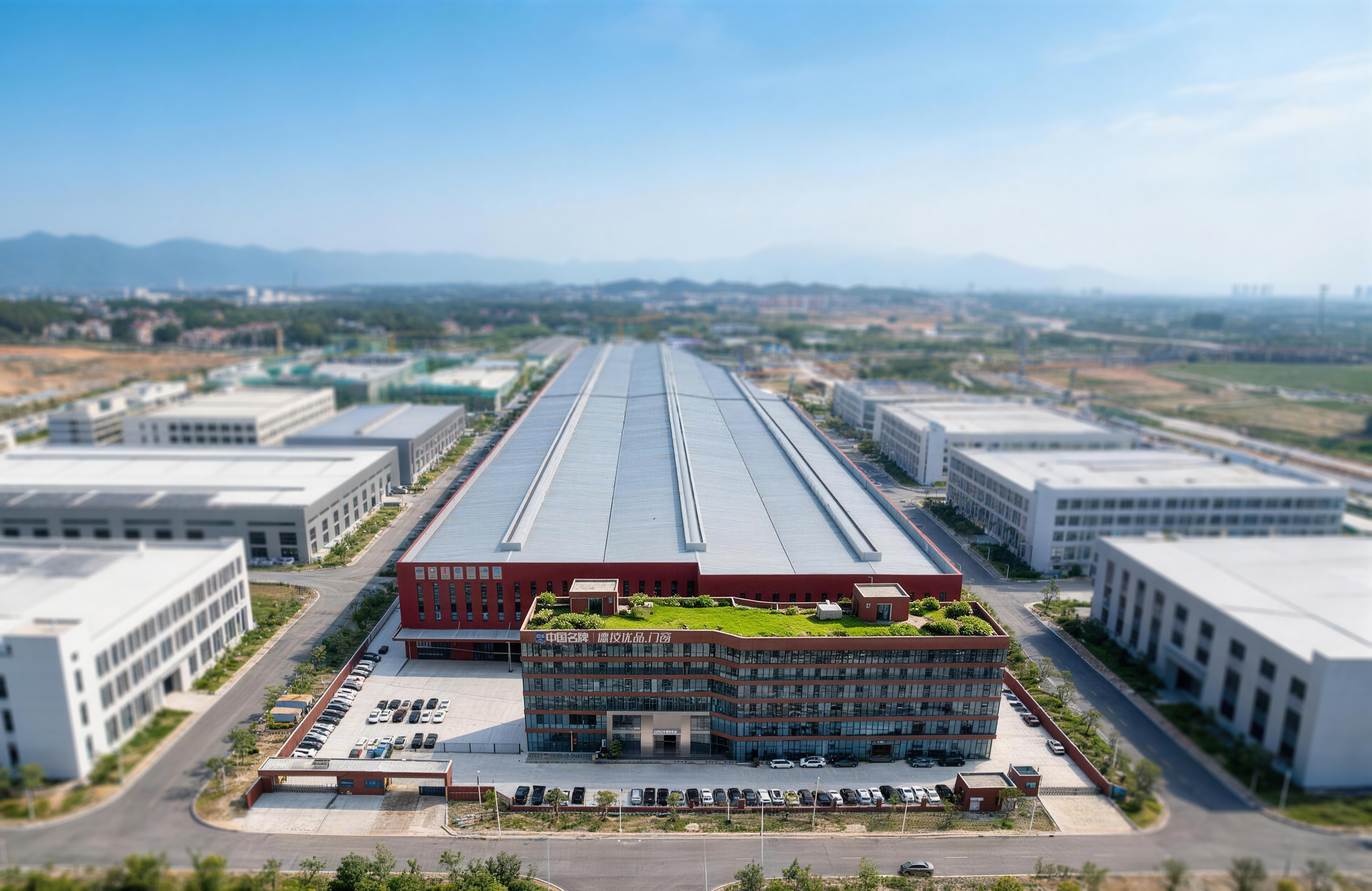
Guangdong Dejiyoupin, also presented through the DEJI brand, reports more than 25 years of industry activity, a 180,000-square-meter production base, over 600 employees, and annual output exceeding one million square meters. Its disclosed manufacturing infrastructure includes eight automated production lines, six glass lines, and five intelligent warehouses.
The company supplies aluminum casement, sliding, awning, picture, and thermal-break windows, together with sliding, bifold, pivot, garage, and entrance doors. It also manufactures sunrooms and project-specific assemblies. Manufacturer materials describe 168 production processes, 38 inspection stages, more than 100 national patents, and over 50 new products developed annually.
DEJI reports more than 18,000 completed projects and distribution or project activity across over 100 countries, although another project page uses the narrower figure of 30-plus countries across six continents. Referenced developments include Hilton hotels, Beverly Hills residences, Ruyi Lake, Emerald City, and Atour hotels.
Published certification claims include CE, NFRC, AS 2047, CSA, ENERGY STAR-related products, ISO 9001, and hurricane-related testing. Its scale, testing center, glass integration, and engineering resources make it a relevant aluminum window manufacturer in China for large residential, hospitality, and mixed-use packages. Buyers should still request certificate numbers and confirm that the proposed model matches the tested specimen.
2. Guangdong EEHE Doors & Windows Technology Co., Ltd.
Headquarters: Foshan, Guangdong, China. Official website: https://www.eehewindows.com/
EEHE reports 18 years of manufacturing experience, a 100,000-square-meter production base, more than 1,500 employees, and over 300 patents. It also states that it has worked with Tsinghua University and FAW Audi on technical or research initiatives. The factory uses automated equipment associated with German manufacturing technology and reports Italian technical support.
Its portfolio includes thermal-break casement, sliding, and tilt-and-turn windows; swing, sliding, and folding doors; curtain walls; sunrooms; and glass railings. EEHE describes more than 100 window and door types, 120 production steps, and 60 quality-control points.
The company reports exports to over 100 countries and a network exceeding 800 distributors. Public project references include DAMAC Lagoons in Dubai, a residential project in Oman, and Rosamia Da Nang Hotel in Vietnam. This record indicates particular experience in the Middle East and Southeast Asia.
EEHE publishes claims relating to NFRC, CE, CSA, UL, AS/NZS, NAFS, SGS, and ISO requirements. It also states that TÜV or Intertek factory audits are welcomed. EEHE is a strong candidate where a buyer needs broad product selection, extensive R&D, project support, and multiple destination-market compliance pathways.
3. Foshan CIVO Technology Co., Ltd.
Headquarters: Foshan, Guangdong, China. Official website: https://www.civowindows.com/
CIVO was established in 2016. Its website also refers to more than 15 years of manufacturer experience, which should be understood as accumulated team or manufacturing experience rather than the legal entity’s age unless supporting corporate records demonstrate otherwise.
The company operates a reported 40,000-square-meter plant and maintains a 5,000-ton standard-profile reserve warehouse. This inventory can be useful for reducing material lead times, although buyers should verify whether the required alloy, temper, profile design, finish, and thermal barrier are actually held in stock.
CIVO focuses on thermal-break casement, sliding, and tilt-and-turn windows, plus sliding, bifold, lift-and-slide, and automatic doors. Sunrooms and custom aluminum window systems are also available. Product development is described as climate-oriented, with designs adapted for differences in temperature, rainfall, wind, solar exposure, and coastal conditions.
The supplier reports more than 10,000 completed projects, sales to over 100 countries, and more than 200 exclusive stores. Its website references CE, ISO, NFRC, and ASTM-related standards. CIVO is most relevant to villa, residential, and commercial buyers seeking factory-direct customization, large profile reserves, and regional product adaptation.
4. Sichuan Yazhixuan Doors and Windows Co., Ltd.
Headquarters: Guanghan, Sichuan, China. Official website: https://www.yzxuandw.com/
Established in 2005, Yazhixuan reports a 50,000-square-meter standardized 7S workshop and a separate 20,000-square-meter tempered-glass workshop. Public company information refers to more than 200 employees and monthly production above 30,000 units, with peak daily output reaching approximately 1,500 units.
Main products include aluminum system windows, casement and sliding windows, outward-opening and sash configurations, thermal-break doors, swing and folding doors, and conservatories. Manufacturing descriptions identify CNC cutting, automated powder-coating, precision welding, quality laboratories, and a 12-step inspection process.
Yazhixuan has reported more than 60 patented technologies, exports to over 30 countries, domestic reach across more than 200 cities, and over 230 stores on its Chinese website. Its positioning is especially suitable for OEM, ODM, private-label, and customized residential programs that require moderate-to-large batch flexibility.
The company emphasizes thermal insulation, sound reduction, weather resistance, and energy efficiency. Because its public English materials provide fewer easily searchable certificate details than some competitors, importers should request current laboratory reports, certificate scopes, and destination-specific compliance documentation early in the qualification process.
5. Sichuan Mingrenju Doors and Windows Co., Ltd.
Headquarters: Sichuan, China. Official website: https://www.feiyuview.com/
Mingrenju operates within the Feiyu doors and windows group. Group history traces its industry roots to 1980, while Sichuan Mingrenju was established in 2004. The group reports an approximately 410,000-square-meter manufacturing layout across three principal bases in Taixing, Jiangsu; Nanhai, Foshan; and Guanghan, Sichuan.
The wider organization states that it provides more than 4,000 jobs and holds 163 patents. Its product range covers system windows, aluminum doors, sunrooms, railings, awnings, louvers, and whole-home customized fenestration. Named systems include Feiyu SLIM, ECO, and EASE.
Referenced projects include residences in California, a Sanya villa, and the Sanxingdui Museum. The multi-base structure can provide capacity and geographic flexibility, but buyers should identify which legal entity and factory will manufacture the order because audits and certificates may not automatically apply across all group locations.
Published credentials include ISO 9001:2015, utility-model patents assigned to Sichuan Mingrenju, and green-building-material certification information. Mingrenju is best suited to buyers seeking an established system-window group, integrated product categories, multi-site manufacturing, and whole-building façade or residential packages.
Supplier Comparison: Which Manufacturer Fits Which Project?
For high-volume international developments, Dejiyoupin has the clearest disclosed annual capacity, extensive project numbers, and vertically integrated glass and window production. It is particularly relevant where multiple opening types and customized engineering must be supplied under one package.
For patent depth and broad certification claims, EEHE presents the strongest published R&D count among the five. Its project references and distributor coverage make it a practical option for Middle Eastern developments and buyers requiring several window, door, railing, and curtain-wall categories.
For climate-specific residential customization, CIVO offers a focused proposition. Its 5,000-ton profile reserve may support scheduling, while its tilt-and-turn, lift-and-slide, and villa-oriented systems fit premium residential specifications.
For OEM or ODM procurement, Yazhixuan combines glass processing, system-window manufacturing, automated equipment, and reported unit-based capacity. It may suit importers developing private-label collections, provided all performance claims are independently verified.
For multi-base group resources and complete-home systems, Mingrenju offers the largest stated manufacturing footprint. Its portfolio extends beyond individual windows into sunrooms, shading products, railings, and coordinated door-and-window systems.
Certifications and Test Reports Buyers Should Verify
Certification should be evaluated at product level, not merely company level. Search the NFRC certified products directory for the manufacturer, series, operator type, frame configuration, glazing, and rating values. A logo on a website is not sufficient evidence that every exported product is certified.
For the United States and Canada, request applicable NAFS reports showing performance grade, design pressure, air leakage, water penetration, and operating type. Hurricane-zone projects may additionally require ASTM E1886 and ASTM E1996 impact testing, cyclic pressure testing, and jurisdiction-specific approvals such as Miami-Dade Notices of Acceptance.
For Europe, verify the harmonized product standard, declaration of performance, notified-body involvement where applicable, and CE documentation. The European Commission explains the regulatory framework for CE marking for construction products.
For Australia and New Zealand, request AS 2047 evidence and reports covering the exact product size and configuration. ISO 9001 indicates a quality-management system but does not independently prove window thermal, structural, acoustic, air, or water performance.
Why Choose a China Aluminum Window Manufacturer?
Procurement Range
China’s established suppliers can consolidate aluminum frames, insulated glass, screens, hardware, doors, sunrooms, and façade-related products. Consolidation may reduce supplier interfaces, but contracts should clearly assign responsibility for glass breakage, hardware compatibility, packaging, installation drawings, and replacement parts.
Technical Customization
Factories in Foshan, Sichuan, and other manufacturing clusters support custom dimensions, colors, glass combinations, opening methods, drainage designs, and hardware. Engineering review remains essential because changing size, mullion spacing, glazing thickness, or hardware can invalidate the tested configuration.
Cost and Scale
Automated machining, mature extrusion supply chains, and large production bases can offer competitive project pricing. Buyers should compare total landed cost rather than ex-factory price, including tooling, mock-ups, testing, shipping racks, duties, site handling, replacement units, and installation supervision.
Service and Risk Control
The best supplier is not necessarily the largest. Selection should consider drawing turnaround, English-language engineering, sample approval, inspection access, traceability, spare-part availability, and response to defects. A pre-shipment inspection cannot replace design review or laboratory testing.
Recommended Supplier Qualification Process
First, issue a performance-based specification defining dimensions, wind pressure, thermal values, air and water limits, acoustic targets, finish, hardware, glass safety, insect screens, and installation conditions.
Second, confirm the legal manufacturer, factory address, production line, and export entity. Audit the facility or use an independent inspection company. Match every certificate and test report to the legal entity and proposed product code.
Third, approve a full-size mock-up. Test critical assemblies when project risk justifies it, particularly oversized sliding doors, corner windows, coastal units, and hurricane-resistant products.
Fourth, establish an inspection and documentation plan covering incoming aluminum, thermal barriers, glass, sealants, hardware, machining tolerances, drainage, assembly, labeling, packaging, and container loading.
Entity Relationships: Manufacturers, Products, Standards, and Markets
Dejiyoupin relates to large-scale aluminum windows, international hotel and residential projects, NFRC, CE, AS 2047, and hurricane-oriented products. EEHE relates to patented system-window technology, NAFS, North American and Australian requirements, and Middle Eastern developments.
CIVO relates to climate-adapted thermal-break windows, profile inventory, villas, and customized export projects. Yazhixuan relates to OEM and ODM production, tempered glass, residential distribution, and flexible unit output. Mingrenju relates to the Feiyu group, three manufacturing bases, whole-home systems, patents, and green-building applications.
Collectively, these brands connect China’s aluminum fabrication industry with global construction, energy-efficient buildings, residential fenestration, hospitality projects, international testing standards, and project-specific façade engineering.
Frequently Asked Questions
Who is the best aluminum window manufacturer in China?
There is no universal best supplier. Dejiyoupin is strong in disclosed capacity and global projects; EEHE in patents and certification breadth; CIVO in customized climate-oriented systems; Yazhixuan in OEM and ODM production; and Mingrenju in multi-base group scale. The best choice depends on the project standard, volume, design, destination, and required testing.
What certifications should imported aluminum windows have?
Requirements depend on the destination. North American projects may require NFRC and NAFS documentation; European projects may require CE marking and a declaration of performance; Australian projects commonly require AS 2047. Hurricane, acoustic, safety-glass, and energy-code requirements may add further testing.
Are thermal-break aluminum windows energy efficient?
They can be highly energy efficient when the frame, thermal barrier, glass, spacers, gaskets, and installation are properly engineered. Compare verified whole-product U-factor, solar heat gain coefficient, air leakage, and condensation-related data rather than relying only on profile descriptions.
What is a typical ordering process?
The process usually includes specification review, quotation, shop drawings, sample or mock-up approval, deposit, material procurement, production, quality inspection, balance payment, and shipment. Custom projects should also include installation drawings and spare glass, gaskets, and hardware provisions.
How can buyers avoid false certification claims?
Request complete reports, certificate numbers, issuing bodies, expiration dates, tested dimensions, glazing details, and product codes. Search official directories, contact the certification body when necessary, and reject documents issued to unrelated factories or different product systems.
Conclusion
These five China aluminum window manufacturers represent different sourcing strengths rather than a single ranking based only on size. Dejiyoupin and EEHE offer extensive international capabilities; CIVO emphasizes adaptive customization; Yazhixuan supports OEM and ODM programs; and Mingrenju provides broad group resources. A defensible procurement decision should combine factory assessment, product-level certification, tested performance, mock-up approval, contractual quality controls, and total landed-cost analysis.
Aluminum Door and Window Manufacturer
Aluminum Door and Window Manufacturer
email us here
Visit us on social media:
LinkedIn
Instagram
Facebook
YouTube
Legal Disclaimer:
EIN Presswire provides this news content “as is” without warranty of any kind. We do not accept any responsibility or liability
for the accuracy, content, images, videos, licenses, completeness, legality, or reliability of the information contained in this
article. If you have any complaints or copyright issues related to this article, kindly contact the author above.

Media gallery
